
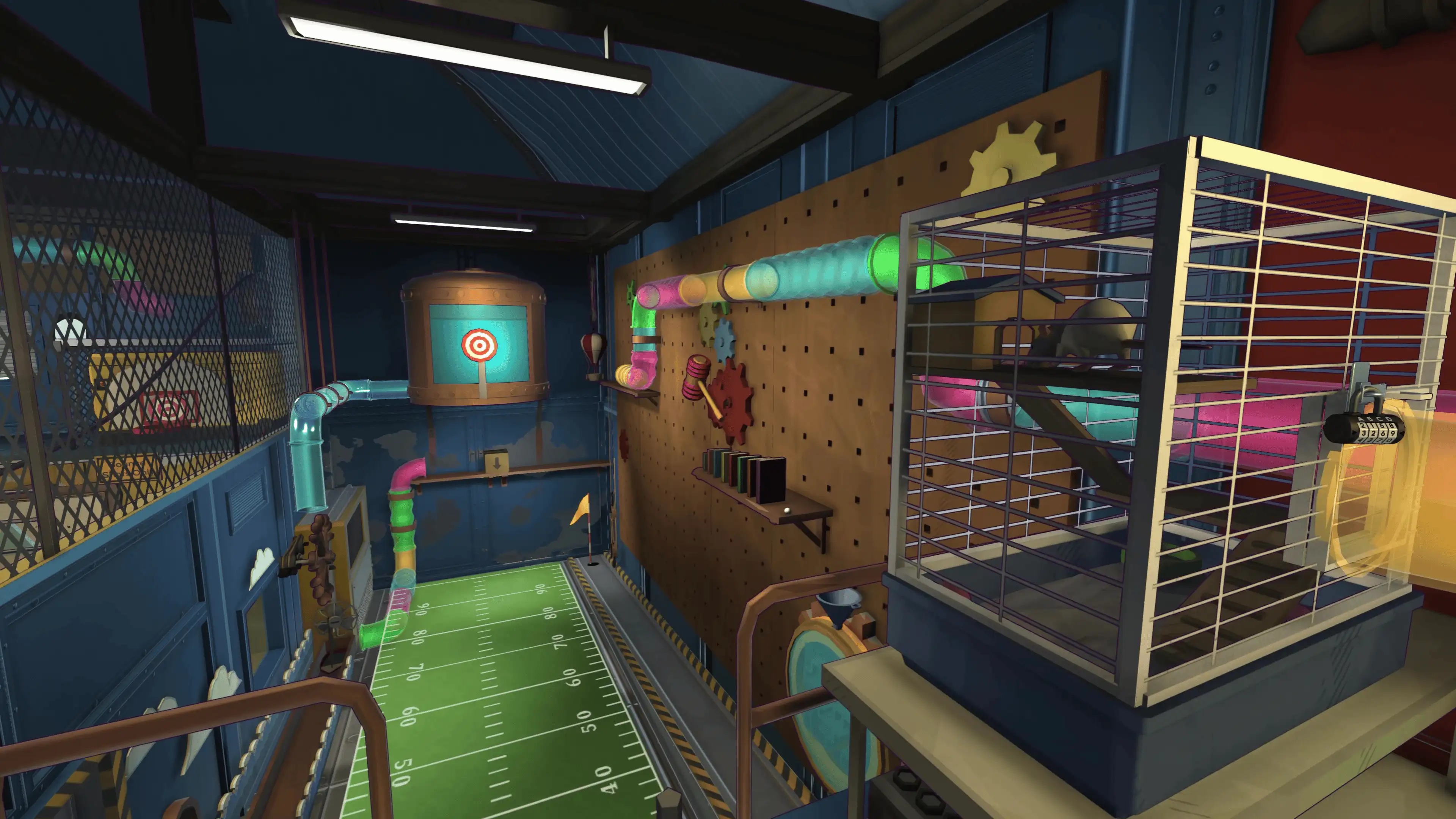
Official screenshot · Coin Crew Games / iam8bit Presents · Illustrative game media.
Separate the two tower references
The phrase demo tower can describe more than one part of Chapter 1, which is why apparently relevant solutions sometimes show a different setting. The Headmaster's Tower belongs to the hub and the activities around arrival at the Academy. That Rings a Bell is the Clocktower exam with its own mechanisms and bell-related objective.
Use the visible objective and objects to tell them apart rather than relying on the building's general shape. Orientation or student tasks point toward the campus route, while seasonal sun mechanisms and an inside view of a clock point toward the escape. This distinction resolves the naming problem without assuming that one room's input opens every tower-related door.
Place the tower within Chapter 1
The official refreshed demo describes the journey to the Academy, introductory escape, campus exploration and Clocktower activity as parts of the first chapter. That means the tower is reached within a broader sequence rather than being the entire demonstration. The tram introduction and classroom help establish what happens before the campus opens into further activities.
If you have not yet completed No Ticket or A Clued Awakening, use the Chapter 1 walkthrough to identify the opening order. A guide beginning inside the Clocktower assumes you are already looking at that room's mechanisms. Returning to the route first prevents a later escape clue from being mistaken for an instruction at the tram station or classroom.
Follow Student Orientation as a campus activity
The May chaptered gameplay reference marks Student Orientation at 20:11. It then continues through campus activities before reaching That Rings a Bell later in the recording. Those labels establish a useful sequence for recognizing your current stage while making clear that orientation and the Clocktower exam are not interchangeable names.
The timestamp locates a video segment, not a deadline for when every player must finish the previous room. Use the activity label and the environment shown in the footage to match your own objective. A player exploring the hub or following a student task may still be in the right chapter even though they have not reached the next formal escape.
Recognize the role of campus tasks
The hands-on preview describes student activities and exploration between main puzzle rooms, including money and campus travel. This explains why a tower-area route can include more than ascending a staircase or entering a single code. Pay attention to the named objective when a walkthrough moves from a building interior into the surrounding hub.
The side-quest research calls those activities Extra Credit and separates them from the main escape sequence. Money earned through tasks can support purchases, while the journal helps organize campus objectives. Use the side-quest or Escape Bucks page when your obstacle is economic or task-related rather than assuming a Clocktower mechanism is the next required action.
Identify the Clocktower exam itself
That Rings a Bell is the name the developer gives to the Clocktower exam. The official demo description also places a meeting with Professor Solange at the Clocktower within the first chapter's activities. Those specific references identify the later escape more reliably than the broad search term tower.
In the May gameplay reference, the creator marks this room at 1:07:42. Use that point to find the appropriate visual segment, then compare the mechanisms with what your game shows. The chapter marker supplies navigation through a recorded demonstration, not a verified universal access route or a floor-by-floor list of lock inputs.
Use the seasonal mechanisms as an identifying clue
Inside the Clocktower, the seasonal puzzle compares labelled seasons with sun positions on the mechanisms and box. A developer reply explains that position or height relationship in response to a player's confusion. If those are the objects in front of you, the dedicated Clocktower article is the relevant puzzle-help page.
The later clock-and-letter clue uses a lens and depends on the viewpoint from inside the tower. The developer explains apparently reversed Roman numerals by noting that the clock is being seen from behind. These are mechanism-specific ideas, so they should not be applied to a general campus orientation task simply because it takes place near a tower.
Match the footage to the updated demo
The October 16 patch explicitly revises clues and user experience in That Rings a Bell. Older May and June recordings can therefore demonstrate the room while showing a different clue presentation from a newer installation. Keep the recording date beside the stage you are watching, especially if the seasonal graphics or written instruction seem different.
Use the developer's explanation for the intended relationship, then read the current display for the input your version requests. The June recording includes player discussion of sun placement and lens or crank requirements, but experimentation is not automatically a verified solution. The current clue and the confirmed mechanism logic are more useful than copying every attempt in an old video.
Check the object before applying a Clocktower hint
The developer's sun-position explanation concerns the labelled seasonal mechanism, while the reversed-numeral explanation concerns the clock seen from behind. The lens belongs to the relationship between the later view and the letter clue. These are specific connections within the exam rather than a general rule that solves all objects in any tower-shaped campus area.
If your current task does not contain those objects, return to the campus objective before trying to apply the hint. A journal activity or purchase requirement belongs to the broader exploration systems described in the related guides. Matching the problem first is more useful than treating every clue in the later escape as a possible answer to an earlier orientation task.
Choose the next page by the problem you have
For identifying the route from the tram to campus and the later exam, use the first-chapter walkthrough. For a sun-position or reversed-clock obstacle, use the Clocktower puzzle guide. For a journal task or a money requirement during exploration, use the side-quest and currency guides instead of a room-input list.
This page's role is to separate the two tower meanings and connect each with the correct activity. The collected material supports that distinction and the Clocktower's core clue logic, but not a complete current-build tower route or a final bell melody. Follow the related guide that matches your visible objective so the next hint addresses the actual obstacle rather than a similarly named location.
Sources & research context
Based on the keyword research checked November 4, 2026. Demo observations and development-preview figures are labelled in the text; store and release statements retain that research date.