
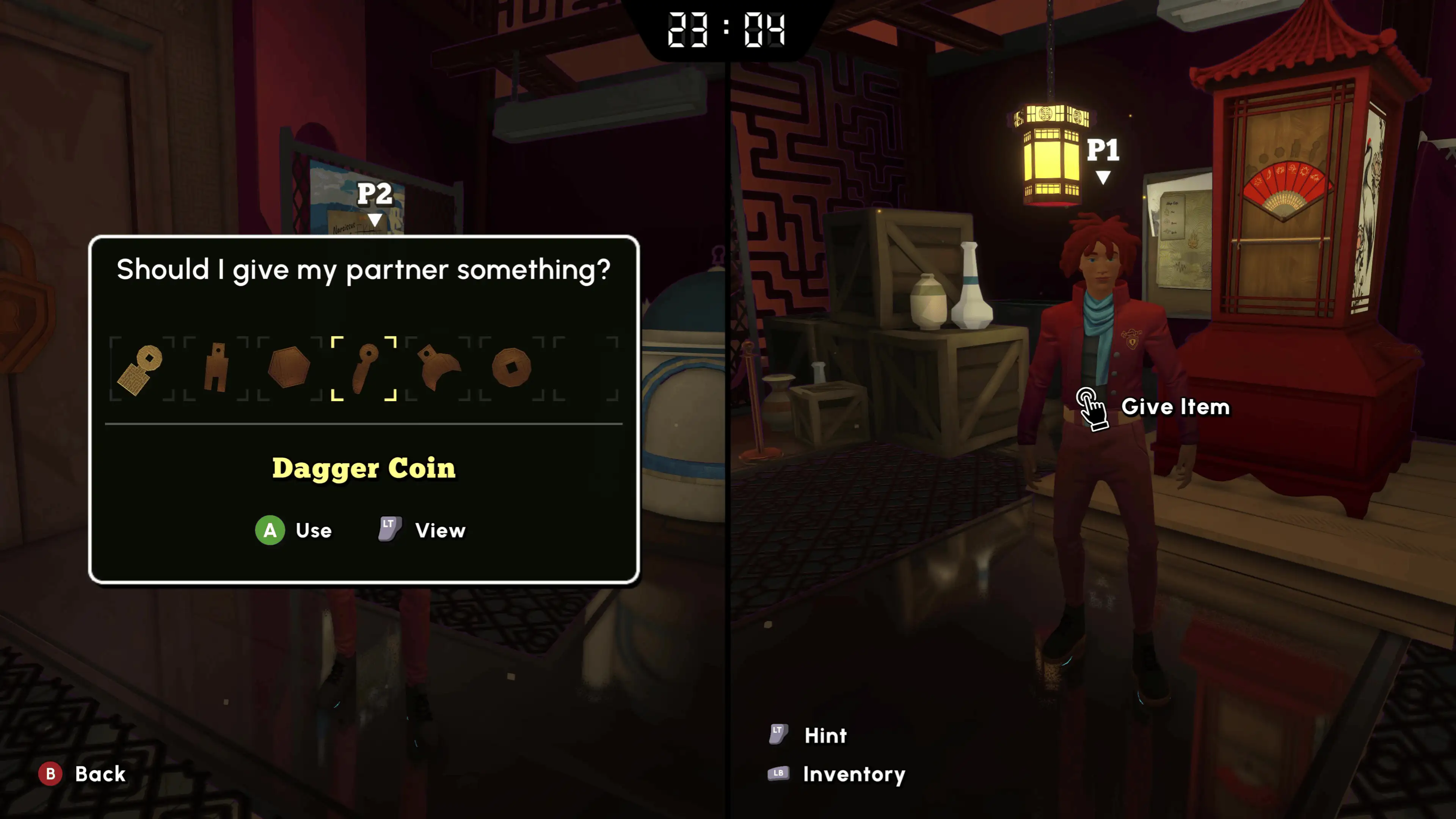
Official screenshot · Coin Crew Games / iam8bit Presents · Illustrative game media.
Understand what Escape Bucks are for
The developer's economy post defines Bucks as money used around the Academy and identifies class books as important purchases. That establishes a practical connection between campus activities and the story's economic requirements. A task that pays money can therefore help progression even when its own puzzle is outside the main escape-room sequence.
Think about Bucks in terms of the next purchase you need rather than treating every pickup as a collectible completion goal. Money has a spending function, while other systems record different kinds of progress. That distinction makes it easier to understand why a side activity can be useful without being the next named main-story escape.
Earn money through Extra Credit
Extra Credit activities are a confirmed source of Escape Bucks, with the developer explaining that partial participation helps support the story. You can choose activities that supply funds instead of treating every side quest as compulsory. The useful task is the one you can identify and solve while working toward the purchase you currently need.
The quest research describes the journal as a tool for tracking campus tasks, so use it to keep those options organized. Read the specific activity's objective rather than assuming all students offer the same puzzle or reward. The collected sources confirm that cash rewards matter, but they do not establish a fastest repeatable farm or a universal payout table.
Find money while exploring the campus
Both hands-on material and review captions describe money found during campus exploration. This gives you an earning route alongside completing student tasks, rather than limiting every Buck to a formal escape-room reward. The November review specifically discusses concealed dollars as part of moving through the Academy.
Use your own observed pickups when making a personal route through an area. A review establishing that hidden cash exists does not supply the position of every note or a complete pickup map. The supported advice is to keep exploration in mind as a source of funds, while avoiding an invented list of guaranteed cash locations.
Use class-book purchases to understand a blocker
Class books are identified in the developer's economy explanation as meaningful purchases, and the demo dialogue also mentions needing textbook money. That is why reaching a purchase requirement can make campus earning relevant to the main story. A cash shortage is a different obstacle from not understanding a lock or lacking the clue for an escape-room mechanism.
Before looking for a new puzzle answer, identify which kind of problem your current objective describes. If it is a purchase, earning Bucks through exploration or Extra Credit is the system these sources point toward. If it is a room-specific clue, the matching escape guide is a more direct next step than searching for additional money.
Understand zipline spending in its preview context
The developer's June zipline post introduces the campus transport service and advertises a 12-Buck offer during development. A separate hands-on account also connects exploration or task earnings with unlocking ziplines. Those sources establish a relationship between currency and campus convenience, rather than treating transport as automatically available from the beginning.
Keep the 12-Buck figure tied to that dated preview instead of assuming every release-build purchase has that exact cost. Read the price displayed by your current version when deciding how to spend. The confirmed takeaway is that ziplines are among the campus uses for money, while a complete current price list is a separate piece of information.
Keep money separate from credits and fish
School credits, Escape Bucks and Red Herrings belong to distinct systems in the research. Bucks are money, while the fish collection is tied to its own hand-in objective. A fish count should therefore not be read as a spendable cash balance, even if a review discusses hidden money and fish in the same campus sequence.
This distinction is useful when an achievement or journal entry appears to ask for a different kind of progress. Read the named resource or activity before deciding that earning cash will satisfy it. The related Red Herrings and achievements articles address those goals without blending them into the economy or assigning a fabricated conversion between systems.
Interpret co-op footage carefully
The January demo playthrough records money being received during campus activity and later dialogue about textbook funds. It supports the existence and use of money in that observed session. The speakers also speculate about shared cash, which is not the same as a developer-confirmed rule for host and guest wallets.
Use that video for the demonstrated earning and purchase context, while checking each player's actual game state during your own session. Do not plan spending around a shared-wallet assumption drawn only from conversation in the recording. The researched co-op page explains supported modes and demonstrated setup separately from untested financial or save-sharing behaviour.
Read a purchase as part of the current objective
Keep the item or service you want to buy beside the amount and requirement displayed by your game. The research identifies class books and ziplines as uses for Bucks, but does not give a complete release-build shopping list. Reading the actual prompt lets you connect your current balance with the purchase in front of you without treating a dated preview offer as a permanent economy rule.
The distinction is useful when deciding between continuing exploration and tackling an Extra Credit task. Both are documented sources of money, while the purchase provides the reason you are gathering it at that moment. This is a decision based on the current objective, not a claimed optimal spending order or a promise that one earning activity always pays more than another.
Keep a simple note of earnings and spending
For your own playthrough notes, record the campus activity that paid money and the purchase you subsequently made. Keep fish pickups and school-credit progress out of that cash record because they belong to separate systems. This makes it easier to remember whether the obstacle you were addressing was a monetary requirement or an unrelated objective encountered nearby.
If you are playing with a partner, record what your own game displays rather than filling in a shared balance from a speaker's speculation in a video. The observed recordings confirm receiving money and discussing books, not a general rule governing every cooperative wallet. Keeping the displayed balance and the task context together preserves the documented economy without introducing an unsupported multiplayer assumption.
Choose a practical next step
If money is the obstacle, return to a journal-tracked Extra Credit task or continue exploring an accessible campus area for the cash the sources describe. If a purchase is available, compare it with the objective you are currently pursuing before spending. This follows the documented earning-and-spending loop without promising unlimited income or an unverified optimal route.
Use the side-quest guide when you need to understand the activity system that produces rewards, and the walkthrough hub when you need the order of the main opening escapes. A purchase, a collectible and a puzzle answer are different kinds of progress even when they are encountered close together. Identifying the actual blocker keeps the currency guide focused on what Bucks can genuinely help you do.
Sources & research context
Based on the keyword research checked November 4, 2026. Demo observations and development-preview figures are labelled in the text; store and release statements retain that research date.